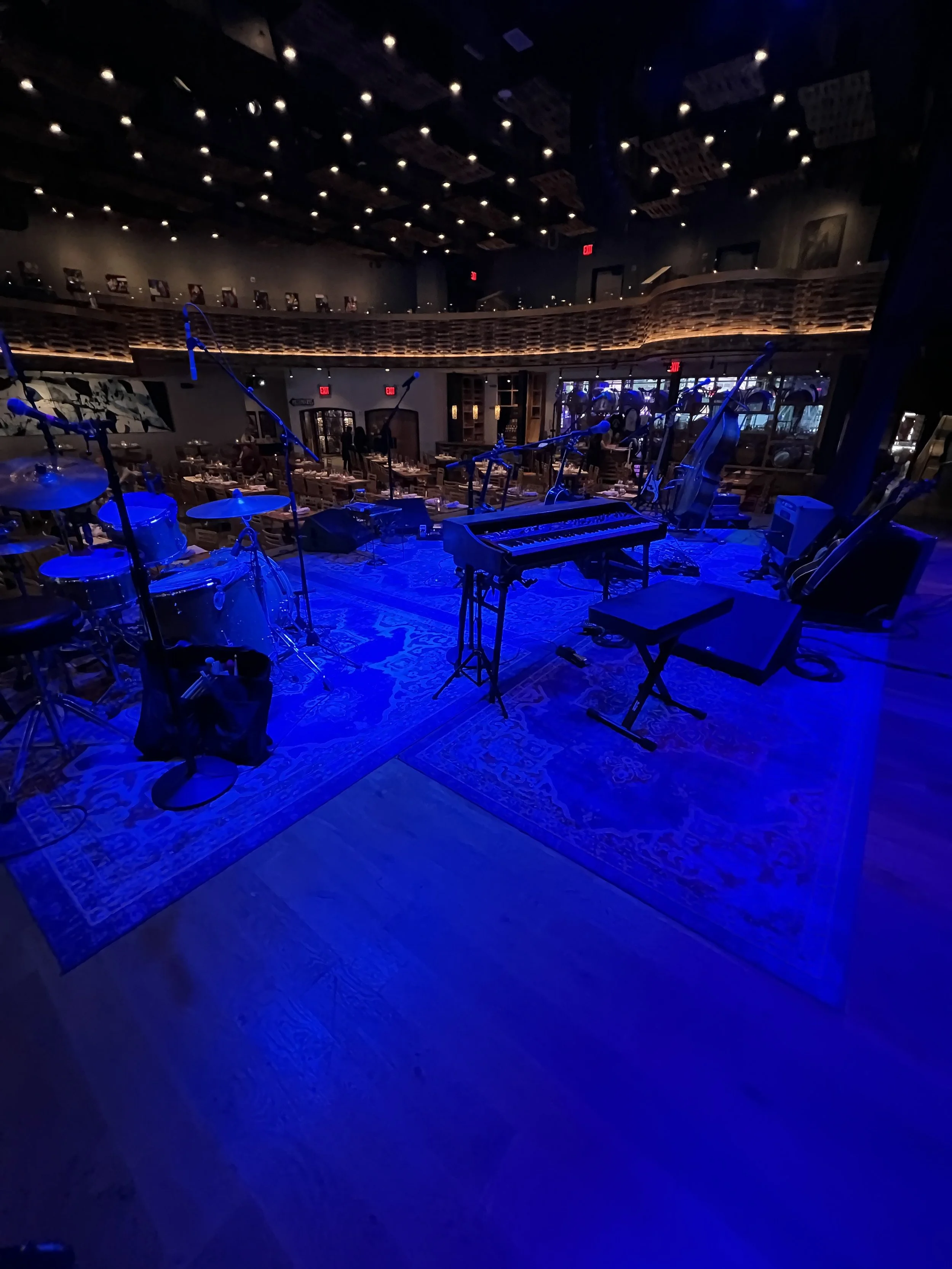

Here is a link to a walkthrough of our new Manalapan Office! Check it out, and reach out to us to schedule your appointment! Manalapan Office Walkthrough Video
Follow The Hearing Center on Instagram
Please follow our practice on instagram @THC_Audiology
Take a look at our fun and informative content
Why do hospitals, schools and pediatricians screen for hearing loss
What are school hearing screenings?
Screening programs are developed and used to identify individuals who are likely to have a specific condition.
In this case, we are talking about hearing screenings!
School-age hearing screenings are an integral tool in identifying children with hearing loss who were not identified at birth, lost to follow-up, or who developed hearing loss later.
A hearing screening is a simple “pass” or “fail” test.
Its purpose is to determine if a child has normal hearing or not.
It consists of a series of beeps or tones, played through headphones, at the limit of normal range to see if the child is able to hear them.
The child responds by raising their hand if the tone was heard across different pitches, and for each ear.
Purpose of a school hearing screening:
A hearing screening can detect potential hearing loss
The screening places a child into either a “normal hearing” group or “possible hearing loss group”
This would lead to a recommendation for further testing to rule out presence of hearing loss
School hearing screenings can pick up hearing losses that are missed at birth
Newborn hearing screenings that are done at the hospital do not reliably rule out potential mild hearing losses
When should we screen?
School districts have timelines set in place for when students will be screened:
Children who are entering school (Kindergarten, 1st grade in some places)
Children in K-3 (annual evaluations at these ages)
Children in 7th grade
Children in 11th grade
Children who have failed a grade
Children with speech/language delay
Children entering a special education program
Who Else Should We Screen?
However, there are other times outside of routine school hearing screenings when a child should have their hearing screening:
Concerns about hearing, speech language or learning
Family history of delayed or late onset hearing loss
Signs of syndromes that include hearing loss
Craniofacial/ear abnormalities
Persistent ear infections for more than 3 months
Head trauma and loss of consciousness
Ototoxic drug exposure (harmful to hearing)
Noise exposure
What is Considered a “Pass”?
Each tone is presented to the child 3 times at 20 dB HL, which is the cutoff loudness level to be considered within the range of normal hearing.
If a child hears it at least 2 out of 3 times, he/she passes at that frequency, or pitch.
If the child passes at all frequencies, then the child passes the screening.
What is Considered a “Fail”?
If a child does not respond to one or more of the tested frequencies at a level greater than 20 dB HL, it is considered a “failed” hearing screening
The child “fails” the screening even if only one ear did not hear the tones at this level
If the Child Fails the Screening, What Happens Next?
The child should be re-screened, either:
On the spot
On another date (should be within 24-48 hours after the first screening)
Another type of screening tool may be used to compare to results from the first screening
The child may be referred to an Ear, Nose & Throat doctor (ENT) or an Audiologist for a full hearing test
Parents should be notified about results from the screening either by mail or over the phone
Consequences of Missed Hearing Loss:
Impaired hearing is a primary health condition, just as impairment of any sense organ.
Sensory deprivation results in restricted or non- development of the central auditory nervous system.
Communicative: Compromised speech-language development.
Social/Emotional: Family will use ineffective communication behaviors, experience frustration, and misinterpret the child’s behaviors and might experience guilt and anxiety when the hearing loss is diagnosed.
Cognitive/Academic: Negative effects on vocational and economic potential and contributions to society.
Microtia Awareness Day
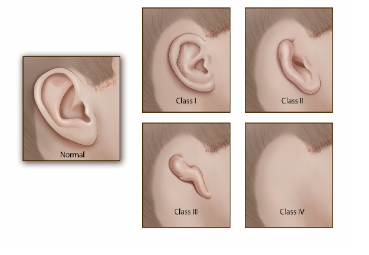
Microtia occurs when the ear does not fully develop during the first trimester of pregnancy
This leaves the child with small, underdeveloped ears, or in some cases, no external ear at all
One in every 9,000 children is born with microtia
There are four classes of microtia:
Absence of a normal ear canal prevents sound from being effectively transmitted to the inner ear,
leading to a conductive hearing loss on the affected ear
Treatment Options:
1) Ear Canal Surgery:
An Atresiaplasty procedure consists of drilling behind the bone behind the microtia to
create an ear canal. After a canal is drilled, skin graft is placed to line the canal and
eardrum. Risk factors of this procedure include narrowing of the ear canal and damage to
the facial nerve.
2) Bone Conduction Hearing Aid (Non-Surgical):
Children ages 5 and younger who are not of implantable age, or for those who do not
wish to undergo surgery, can use a hearing processor that is attached to a headband. The
device works via vibration, in which sound causes the skull to vibrate, allowing the
individual to hear through bone conduction.
3) Bone Anchored Hearing Apparatus (BAHA):
A BAHA bypasses the outer and middle ear and stimulates both cochleae via bone
conduction. It consists of a metal abutment that is surgically implanted into the patient’s
skull, and an external piece that snaps on. A risk factor for this option is that it has a
higher infection rate, since the abutment site requires thorough hygiene.
4) Osia Implantable Device:
The Osia implantable device is similar to a BAHA, as it bypasses the outer and middle
portions of the ear to stimulate the cochlea via bone conduction.With the Osia device, an
internal implant is drilled into the mastoid bone, and an external processor connects to the
internal piece via magnet to stimulate both cochleae. This device requires less hygienic
maintenance, but is not ideal for someone who undergoes frequent MRIs as it can cast a
What is EVA Enlarged Vestibular Aqueduct
What is an Enlarged Vestibular Aqueduct (EVA)?
The vestibular aqueduct is a bony canal that begins inside the temporal bone and travels
within the inner ear to deep inside the skull
Running through the aqueduct is a fluid-filled tube called the endolymphatic duct, which
connects the inner ear to the endolymphatic sac
The role of these two structures is to maintain a normal ion concentration
Some believe that the vestibular aqueduct is mature at birth, while others believe it
continues to grow postnatally until about age 3-4
A vestibular aqueduct is considered enlarged if it is greater than 1-1.5mm. Usually, when the
aqueduct is enlarged, the endolymphatic duct and sac are large too. This causes the regulation of
cochlear fluid and ion concentration to be disrupted
EVA & HEARING LOSS
EVA can occur in isolation, but also can co-occur with congenital disorders such as
Pendred syndrome, CHARGE syndrome and Branchiootorenal syndrome
EVA can lead to both hearing loss (most likely sensorineural) and balance issues
It can be identified with a CI Scan or an MRI
There is no “cure” for EVA, but hearing aids are most commonly used to manage hearing
loss associated with it
Vestibular therapy can be beneficial to those who have balance problems due to EVA
EVA & CONTACT SPORTS
Those with EVA may be at risk for progressive hearing loss, in which the hearing can
gradually or rapidly decrease or fluctuate over time
Head injury or barotrauma increase the likelihood of progressive hearing loss
People with EVA are *strongly advised* to avoid contact sports such as football and
soccer, as well as wear helmets when engaging in activities that put them at risk for head
injury
Contact us for more information on EVA!
What are vestibular disorders
Vestibular Disorders
How does my ear affect my balance?
The Organ for Balance, or the vestibular system, lies within the inner ear
It consists of three fluid-filled loops call the semicircular canals
The fluid within the canals changes in response to head motion
Our vestibular system, eyes and proprioceptive system help us move our bodies within
space and maintain our balance
Vestibular conditions can be caused by:
Changes in medication
Poor circulation of the ear
Movement of “ear crystals” within the semicircular canals
Infections
Debris in the semicircular canals
Traumatic brain injury
Symptoms of a vestibular disorder:
1. Falling, swaying or tilting
2. Vertigo
3. Floating feeling
4. Feeling off-balance
5. Leaning to one side
How do I test for a vestibular disorder?
An audiologist may perform a videonystagmography (VNG) to test for certain vestibular
conditions. This gives the audiologist information about how the vestibular portion of the inner
ear is functioning. The patient wears goggles to monitor eye movements. The patient will
perform several tasks, including following a moving target on a screen, moving their head and
body in various positions, and having warm and cool air put into the ear canal. During these
tasks, the audiologist monitors eye movements and attempts to simulate dizziness to determine
the potential source of symptoms.
What happens next?
Depending on the results of the testing, an audiologist may refer for vestibular therapy.
Sometimes, the audiologist may refer to a specialist, such as an Ear, Nose and Throat physician
or a neurologist to determine if additional testing is warranted. In certain cases, home exercises
may be recommended to alleviate dizziness symptoms.
Who benefits from using custom musician ear plugs
WE MAKE CUSTOM MUSICIAN MONITORS!!
Q: What are musician monitors?
A: Musician earplugs and in-ear monitors are used for musicians and sound engineers to protect
their ears when performing or when exposed to high levels of sound pressure
Q: How do custom musician plugs differ from conventional ear plugs?
A: Conventional earplugs muffle speech and music; additionally, conventional earplugs reduce
more sound in the high frequencies than low and mid frequencies, which makes speech and
music sound unnatural and distorted. Custom earplugs allows for speech and music to sound
natural, preserving the distinct quality and richness of speech and music, but it is ensured to be at
a safer volume level.
Wearing in-ear monitors allows for musicians to hear themselves play music while still
protecting their hearing.
Musicians are not the only professionals who use musician plugs or in-ear monitors:
Aircraft:
Crew
Flight instructors
Passengers
Pilots
Athletics:
Athletes
Coaches
People at sporting events
Construction:
Carpenters
Equipment operators
Road builders
Steel workers
Emergency vehicles:
EMTs
Highway patrol
Firefighters
Industrial:
Factory workers
Shop teachers
Students
Supervisors
Leisure:
Concerts
Nightclubs
Noisy restaurants
Medical-Dental:
Dentists
Hygienists
Technicians
Surgeons
Motor Sports:
Motorcyclists
Pit crews
Race car drivers
Spectators
Music:
Concerts
Marching bands
Musicians
Night clubs
Others:
Delivery drivers
Markey traders
Night club staff
Truck drivers
Celebrities with Hearing loss
CELEBRITIES WITH HEARING LOSS
1) Stephen Colbert: Colbert is deaf in his right ear as a result of surgical removal of a tumor
when he was a child. Colbert initially wanted to be a marine biologist, but the damage to
his ear would not allow him to scuba dive.
2) Steve Martin: The actor utilizes hearing aids to manage hearing loss and tinnitus. Martin
reportedly has hearing damage as a result of noise-induced hearing loss after being too
close to a loud gunfire on the set of “The Three Amigos” without wearing hearing
protection.
3) Katie Leclerc: The actress, who played a deaf teenager on the TV show Switched at
Birth, was diagnosed with Meniere’s disease, which causes fluctuating hearing loss,
ringing in the ears, aural fullness, and vertigo.
4) Whoopi Goldberg: The TV personality reportedly has low-frequency hearing loss, which
creates difficulty hearing vowel sounds like “a” and “e” that produce the energy of sound.
Goldberg has attributed her hearing loss to many years of listening to loud music without
hearing protection. She currently wears two hearing aids and is vocal about her hearing
journey.
5) Halle Berry: Berry has stated that she has a significant degree of hearing loss as a result
of a head injury.
6) Lou Ferrigno: The bodybuilder and actor has had profound hearing loss since the age of
three. He wore many hearing aids over the years, but due to his impaired word
understanding, was ultimately a Cochlear Implant recipient. Ferrigno has stated that the
CI has helps him hear “s” sounds and ambient noises that he was previously not able to
hear.
7) Derrick Coleman Jr: The football player has had known hearing loss since the age of
three due to a hereditary condition. He reportedly wears pantyhose underneath his helmet
to keep his hearing aids protected from moisture and prevent feedback!
Protecting your hearing aids in the Summer time
The summer is the riskiest time of year for hearing aids!
Hearing aids can:
• Get lost on days at the beach
• Be forgotten about when jumping into the pool
• Clogged with sand
• Moist from sweat
Here are some tips to protect your hearing aids during these summer months!
1) Keep up with daily cleaning!
Use the brush to clean hearing aid microphones
Wipe down the hearing aids using a microfiber cloth
Change wax filters when necessary
2) Use a drying kit or desiccant to place next to your hearing aids at night
3) Place your hearing aids inside nylon sleeves to protect them from moisture
4) Remember to place your hearing aids in a portable pouch before going in the pool or onto
the sand. Don’t put them in your pocket!
5) Use an otoclip to clip your hearing aids to your shirt while playing sports
6) Visit your provider to have your hearing aids cleaned and checked to make sure they are
working properly for those summer activities!
Enjoy your summer!